
The heart of a Rally2 car: turbo, restrictor, anti-lag and sequential gearbox
Rally2 cars are the backbone of rallies all over the world. We take their drivetrain apart piece by piece.
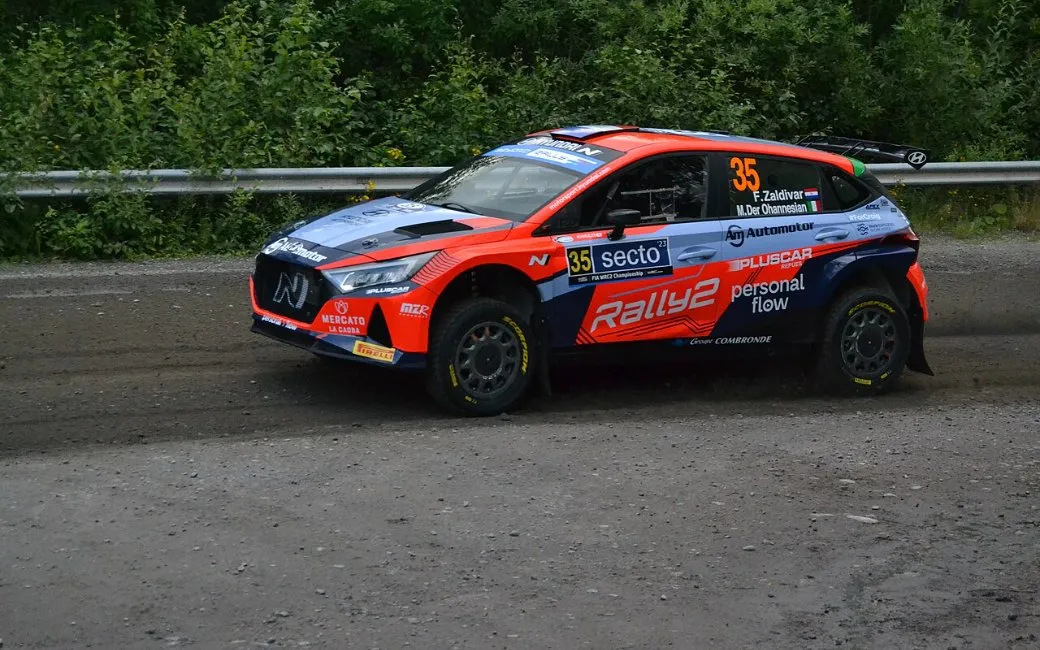
Rally2 is the most widespread four-wheel-drive rally class in the world, from national championships to WRC2. These cars use 1.6-litre turbocharged engines. The key part limiting power is the restrictor fitted to the turbo's air intake: by limiting how much air the engine can draw in, it keeps output at roughly 280–290 hp. Under the 2027 rules approved by the FIA, the restrictor diameter grows from 32 mm to 33 mm, which means roughly 15 hp more.
The classic weakness of turbo engines is lag: when you lift off, exhaust flow drops, the turbo slows down and when you get back on the throttle the power arrives a moment later. The anti-lag system in rally cars prevents this. When the driver lifts, engine management retards the ignition and lets some fuel burn in the exhaust, so the turbo keeps spinning and power is instantly available on the exit of the corner. The bangs heard on the stages and the flames from the exhaust are the signs of this system. The price is high temperatures and a shorter turbo life.
Power goes to all four wheels through a five-speed sequential gearbox. Pulling the lever back shifts up and pushing it forward shifts down; thanks to dog engagement, shifts are very fast and no clutch is needed on upshifts. Mechanical limited-slip differentials on the front and rear axles increase traction. The hydraulic handbrake next to the driver locks the rear wheels instantly to rotate the car through tight hairpins. Together, these parts make a Rally2 car one of the fastest and toughest machines on rally roads.