

Rally car suspension: long travel, dampers and the art of set-up
A rally car's speed is decided more by its suspension than by its engine. Why are gravel and tarmac set-ups so different, and what can be adjusted on a damper?
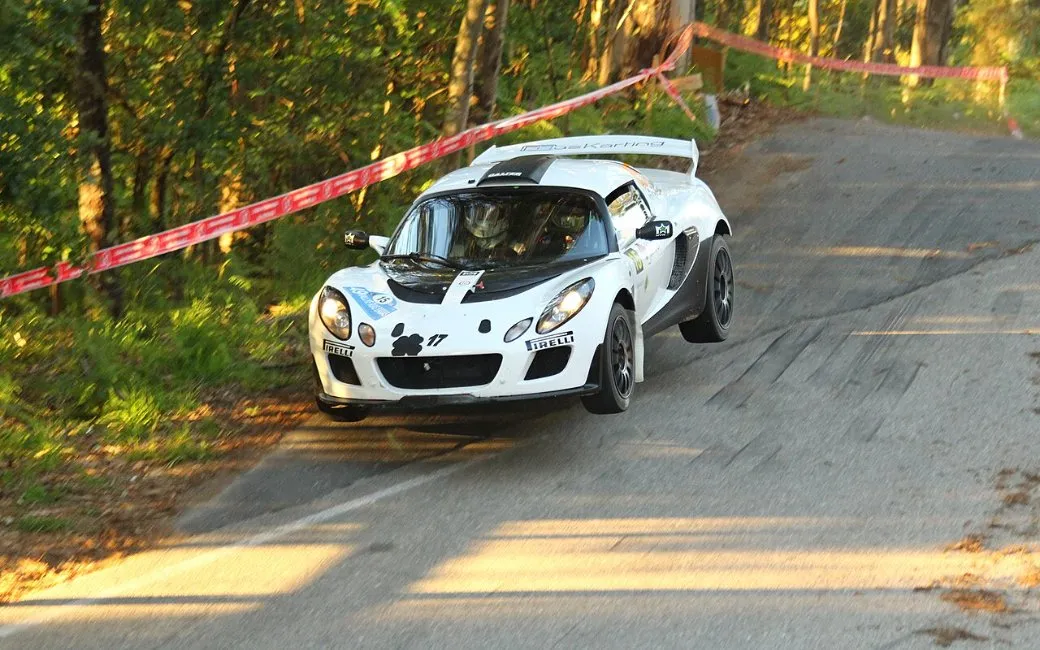
A rally car's suspension does far more work than a road car's. It must absorb landings from jumps, keep the wheels pressed into potholes and rocky ground, and at the same time keep the body under control in corners. That is why suspension travel, the distance the wheel can move up and down, is several times that of a road car, especially on a gravel set-up. Rally2 cars use independent MacPherson-type suspension front and rear.
The heart of it all is the dampers. Modern rally dampers can be adjusted separately for compression (bump) and extension (rebound), and on compression separately again for low and high speeds. The low-speed setting governs how the body rolls and pitches in corners and under braking; the high-speed setting governs sudden impacts from bumps, rocks and landings. Spring rates, anti-roll bars and ride height are also part of the set-up.
Gravel and tarmac call for what are almost two different cars. On tarmac the car sits low, the springs are stiff and the track is wide; the aim is to minimise body movement and keep the tyre at the best contact angle with the road. On gravel the car is raised, softer springs and long travel are used, and the underbody is protected by sump guards. Snow and ice rallies are a world of their own.
The right set-up combines the driver's feel with data. Position sensors on the dampers and data loggers show how the suspension worked along the stage; the engineer combines that data with the driver's comments, such as the rear stepping out too much or the car bottoming out on landings, and changes the set-up. That is why recce and test days matter as much as the rally itself.