

How does fast charging work? AC, DC and the secret of the charging curve
What is the difference between a home socket and a motorway fast charger, why does charging slow down after 80 percent, and what does 800 volts bring?
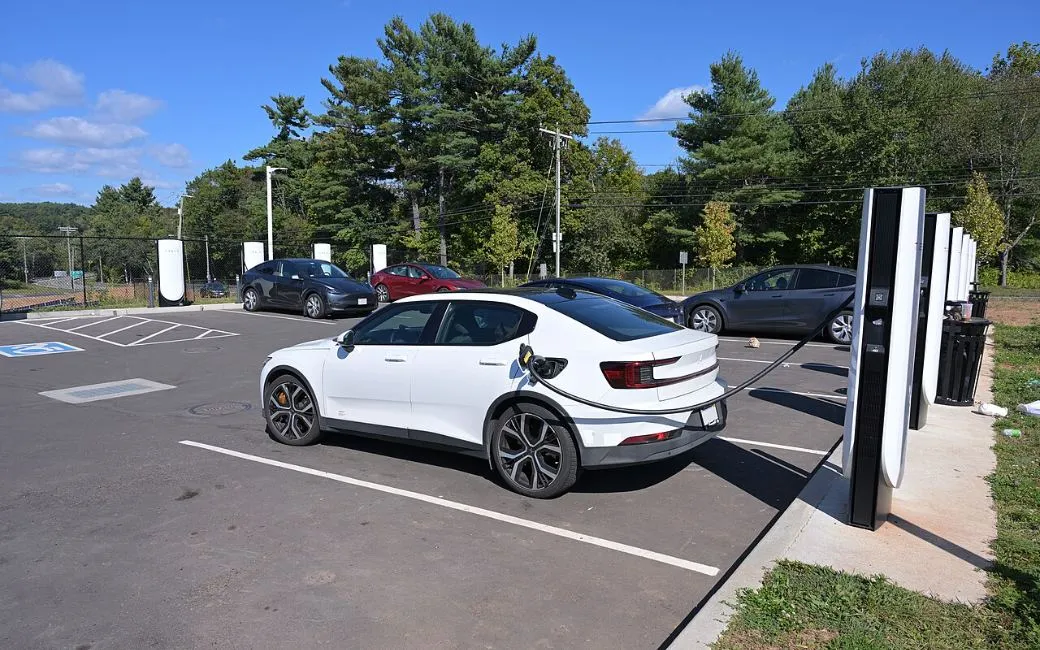
An electric car can charge in two ways. With AC charging (a home wallbox or car-park chargers, usually 7–22 kW), the alternating current from the grid is converted to direct current by the charger built into the car, so charging speed is limited by that on-board unit. With DC fast charging, the conversion happens inside the station and the energy goes straight to the battery. That is what makes powers from 50 kW up to 350 kW possible. In Europe and Türkiye the standard DC fast-charging connector is CCS2.
During fast charging the power does not stay constant; this is called the charging curve. An empty battery accepts high power, but as it fills up the cell voltage approaches its upper limit and the system lowers the current to protect the cells. That is why manufacturers usually quote the 10–80 percent time: above 80 percent charging slows down noticeably. Battery temperature is also critical. Cold cells can be damaged by fast charging, so the system reduces power. Many cars pre-heat the battery on the way when a fast charger is set as the navigation destination.
This is why 800-volt architectures are in the spotlight. Power is voltage multiplied by current, so drawing the same power at 800 V needs half the current of a 400 V system. Lower current means less heat and thinner cables, which makes it easier to sustain high power for longer. Two units are often confused: kW is power (the charging speed) and kWh is energy (the battery's capacity). On a long trip, the quickest approach is usually not to fill the battery completely but to make short, frequent stops between 10 and 80 percent.